Key Takeaways
5 points- Read all three bureau reports, because Equifax, Experian and TransUnion do not share files and an error can appear on only one.
- Check each section against your own records: personal information, accounts, collections and negative items, and inquiries.
- The FCRA protects your right to an accurate and complete report, so a real debt reported with the wrong balance, status or dates can still be disputed.
- A bureau must generally reinvestigate a dispute within 30 days and notify the company that reported the item within five business days.
- If a bureau or creditor fails to reasonably investigate, the FCRA allows actual damages, statutory damages of 100 to 1,000 dollars for a willful violation, and attorney's fees.
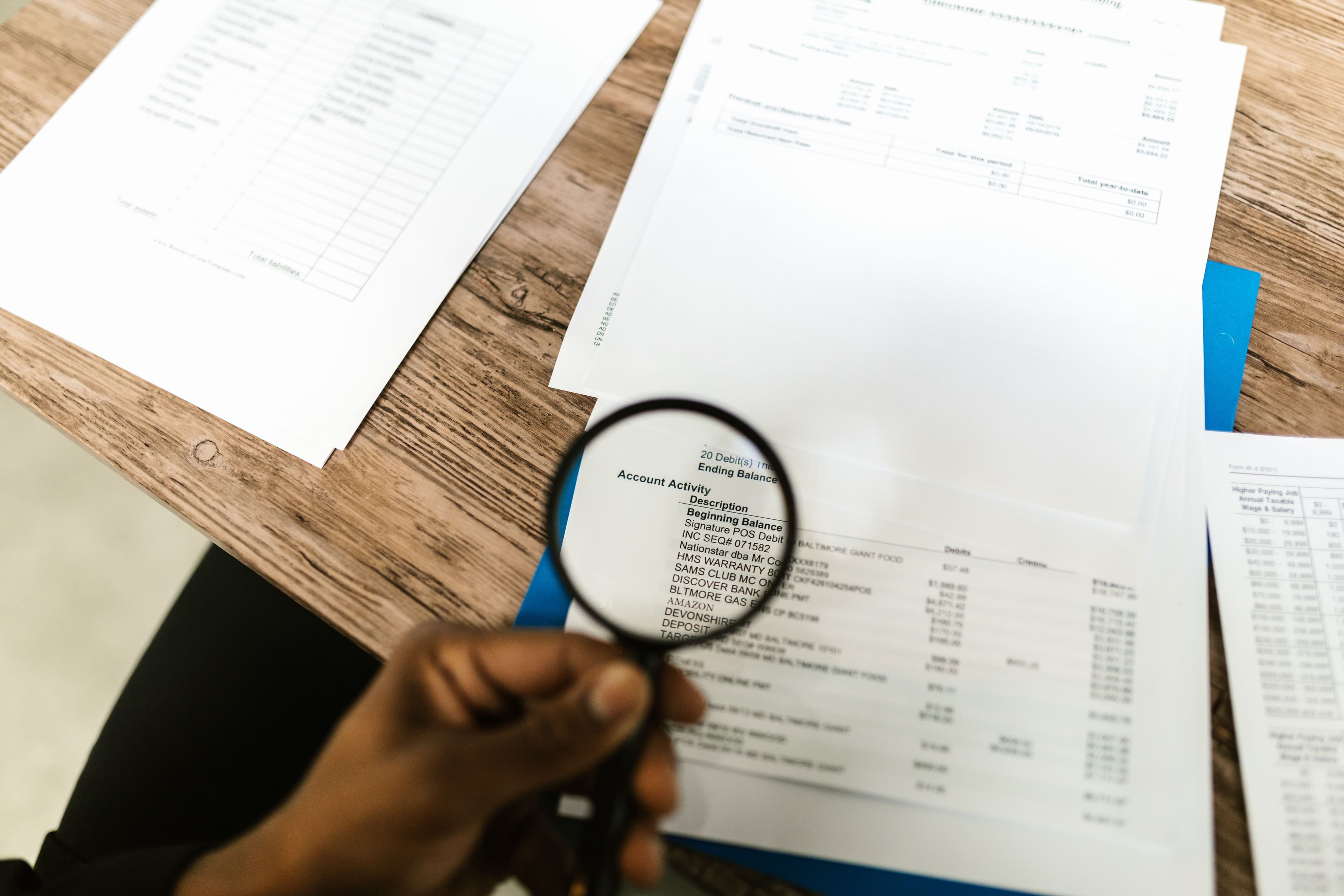
To read a credit report, get your reports from all three bureaus, Equifax, Experian and TransUnion, then go through each one section by section: your personal information, your accounts, your collections and other negative items, and the list of who has pulled your credit. In every section you are asking one question: does this match my own records? Anything that does not is worth a closer look, because an inaccurate entry is something federal law gives you the right to dispute.
A credit report is not your credit score. The score is a number calculated from the report. The report is the raw record, and the record is where mistakes live. Here is how to read it, and what to do when it is wrong.
Before you start: get all three reports
The three bureaus do not share files, so an error can appear on one report and not the others. You can get free reports from all three at AnnualCreditReport.com, the only official source. We explain why that site, and not the look-alikes, in our guide to the best site to get a free credit report. Checking your own report does not hurt your score.
Print or save each report with the date you pulled it. If you later dispute something, that dated copy is your evidence of what the bureau was reporting.
Section 1: Personal information
This is the top of the report: your name and any variations, your current and former addresses, your Social Security number (usually partly hidden), your date of birth and sometimes employers. It does not affect your score, but it is where two of the most serious problems show up first.
A name, address or Social Security number you do not recognize. This can mean another person's information has been merged into your file, often someone with a similar name. A mixed file can pull their debts onto your report.
An address you never lived at, alongside accounts you never opened. That pattern points to identity theft. See identity theft on your credit report for the right to have fraudulent information blocked.
Section 2: Accounts
Each credit card, loan or line of credit appears as its own entry, sometimes called a tradeline. For each one, check these fields against your statements:
Creditor name and account number: is this account yours at all?
Date opened and account type: individual, joint or authorized user. Being listed as responsible for an account you were only an authorized user on is an error.
Balance, credit limit and high balance: a wrong limit or an old balance on a paid-off account can distort your score.
Status: current, late, charged off, closed, paid. A paid account still shown as owing, or a closed account shown as open, is inaccurate.
Payment history: the month-by-month grid. Compare any late marks with your records. A payment you made on time but that shows as 30 days late is an error you can dispute.
Date of first delinquency: the month you first fell behind and never caught up. This date sets how long a negative account can stay on your report, so a wrong date can keep it there longer than the law allows.
Section 3: Collections and other negative items
Collection accounts usually show the collection agency, the original creditor and the amount claimed. Read them with extra care, because debt is often sold more than once and each sale is a chance for the record to go wrong. Look for:
The same debt listed twice, once by the original creditor with a balance and again by a collector.
A balance higher than what you owed, or a debt you already paid or settled still shown as unpaid.
A debt that is not yours.
An old debt showing a recent delinquency date, which makes it look newer than it is.
Most negative items can stay on a report for about seven years, and a bankruptcy for up to ten, under 15 U.S.C. § 1681c. For a collection or charged-off account, the clock is tied to the original delinquency, not to the date a collector bought the debt. By statute, the seven years begin 180 days after that first delinquency. Our posts on a wrong collection on your report and how long a bankruptcy stays go deeper.
A public records section still appears on some reports, but today it generally shows only bankruptcies. Civil judgments and tax liens were removed from credit reports in 2017 and 2018.
Section 4: Inquiries
This section lists who has pulled your report. Soft inquiries, such as your own checks or prescreened offers, do not affect your score. Hard inquiries come from applications for credit and can stay on the report for two years. A hard inquiry from a company you never applied to may mean someone pulled your report without a permissible purpose, which is its own violation. See when a hard inquiry is illegal.
Accurate but negative, or actually wrong?
The law does not let you remove accurate information because it hurts. A late payment you really made, reported correctly and within the time limit, can stay. What the Fair Credit Reporting Act gives you is the right to an accurate and complete report. That covers more than debts that are not yours. A real debt reported with the wrong balance, the wrong status, the wrong dates, or listed twice is still inaccurate, and you can dispute it.
A quick checklist for each report
Every name, address and Social Security number is yours.
Every account and collection is yours.
Balances, limits and statuses match your statements, including paid and closed accounts.
Late marks match your own payment records.
No debt appears twice.
No negative item is older than its reporting limit.
Every hard inquiry is from an application you made.
What the law says when you find an error
Under 15 U.S.C. § 1681i, when you dispute an item, the bureau must conduct a reasonable reinvestigation, generally within 30 days, and must notify the company that supplied the information within five business days. That company, called the furnisher, then has its own duty under 15 U.S.C. § 1681s-2(b) to investigate and correct what it reported. If the item cannot be verified, it must be deleted or corrected, and the bureau must send you the results in writing.
Dispute in writing with each bureau showing the error, explain exactly what is wrong, and attach copies of your proof, never originals. Keep copies of everything you send and receive. Disputing with the bureau matters: the furnisher's duty to investigate under § 1681s-2(b), and your right to sue it for ignoring that duty, are triggered by a dispute sent through the bureau.
When the bureau says "verified" and nothing changes
Many people dispute an obvious error and get back a one-line answer that the item was verified. Often that means the bureau passed an automated code to the furnisher and accepted its reply. A dispute that ends that way is not necessarily the end. A bureau that fails to follow reasonable procedures for accuracy, or fails to reasonably reinvestigate, and a furnisher that fails to investigate properly, can be held liable under the FCRA.
What you can recover, under 15 U.S.C. §§ 1681n and 1681o:
Actual damages, such as a denied loan, a higher interest rate, or emotional distress, for a negligent or willful violation.
Statutory damages of 100 to 1,000 dollars for a willful violation, even without proof of a specific loss, plus possible punitive damages.
Attorney's fees and costs when you win, paid by the other side.
Time matters. Under 15 U.S.C. § 1681p, a claim must generally be filed within two years after you discover the violation, and no later than five years after it happened.
When to talk to a Florida consumer protection attorney
If you found an error, disputed it, and the bureau or the creditor would not fix it, that is the point where a lawyer is worth a call. The same is true if an error cost you a loan, an apartment or a job. Our FCRA practice handles these cases across Florida, and because the law makes the other side pay attorney's fees when you win, you can usually talk to us without paying anything up front. For more on that decision, read when a dispute is not enough.
Found something on your report that is not right and could not get it fixed? Request a free case review and we will look at it with you.
Frequently Asked Questions

Free Consultation
Were your rights violated?
Free Consultation
Were your rights violated?
We fight for consumers — no upfront cost, no fee unless we win. (561) 264-7211
Consumer Law Florida · Licensed Florida attorneys · Serving clients statewide by phone & video