Key Takeaways
5 points- AnnualCreditReport.com is the official site for the free credit reports federal law guarantees from Equifax, Experian and TransUnion.
- The bureaus now let you check each report for free every week, and checking your own report does not hurt your credit score.
- You are entitled to extra free reports in certain situations, including within 60 days of being denied credit because of your report.
- Errors such as accounts you never opened, wrong collections and outdated negative items can be disputed with the bureau and with the company that reported them.
- If a bureau fails to reasonably investigate your dispute, the FCRA allows a lawsuit for damages and attorney's fees.
The best site to get a free credit report is AnnualCreditReport.com. It is the only website federal law set up to give you free reports from all three nationwide credit bureaus, Equifax, Experian and TransUnion, and it now lets you check each of them for free every week.
That answer takes one sentence. The harder part comes after the report arrives, because a free report is only useful if you know what to look for and what to do when something on it is wrong. This guide covers both, including what the Fair Credit Reporting Act lets you do when a bureau refuses to fix a mistake.
Why AnnualCreditReport.com is the only official source
The Fair Credit Reporting Act (FCRA) gives you the right to a free copy of your credit file from each nationwide credit bureau once every 12 months, requested through one central source (15 U.S.C. § 1681j). The three bureaus run that central source together, and it is AnnualCreditReport.com. The Federal Trade Commission calls it the only authorized source for your free reports.
The bureaus now go further than the law requires and let you pull a free report from each of them every week on the same site. You can order in three ways:
Online at AnnualCreditReport.com, where you can see your reports right away.
By phone at 1-877-322-8228.
By mail, using the Annual Credit Report Request Form from the site. Phone and mail orders are typically mailed to you within 15 days.
You will be asked for your name, address, Social Security number and date of birth, and you may need to answer questions only you would know, such as the amount of a monthly payment. That is how the bureaus confirm the report is going to the right person.
Is AnnualCreditReport.com safe?
Yes, as long as you type the address yourself. The risk is not the real site, it is the sites that imitate it. According to the FTC, imposter sites use misspelled or look-alike web addresses and the word "free" to collect your personal information.
A few simple checks keep you on the real one:
Type annualcreditreport.com into your browser rather than clicking an ad or an email link.
The official site does not ask for a credit card to give you your free reports.
AnnualCreditReport.com and the credit bureaus will not email you asking for your Social Security number or account information. If an email, text or call that claims to come from them asks for those details, do not reply or click any link. Go to the site yourself.
Be careful with offers that call a report "free" but sign you up for a paid monitoring trial. Those are sales products, not the free reports the law guarantees.
Does checking your own credit report hurt your score?
No. Looking at your own report is not the kind of inquiry that lowers a score. Hard inquiries, the kind lenders see, usually come from applying for new credit. You can check as often as the site allows without any effect on your credit.
One thing to know: the free reports do not include a credit score. A score from a bank app or a credit card statement is a separate product, calculated from the same underlying data. If the data is wrong, the score built on it can be wrong too, which is why the report itself matters more.
When you are entitled to extra free reports
On top of the free reports on AnnualCreditReport.com, the FCRA gives you an additional free report in several situations (15 U.S.C. § 1681j):
You were turned down for credit, insurance or a job, or offered worse terms, because of something in your report, and you ask within 60 days of the notice.
You believe your file is inaccurate because of fraud, such as identity theft.
You are unemployed and plan to look for a job within 60 days.
You receive public welfare assistance.
The first one matters most. If a lender or employer tells you a credit report played a part in a decision against you, get that report and read it closely. That notice can be the first sign that something on the report is wrong.
What to look for: the errors that can turn into FCRA cases
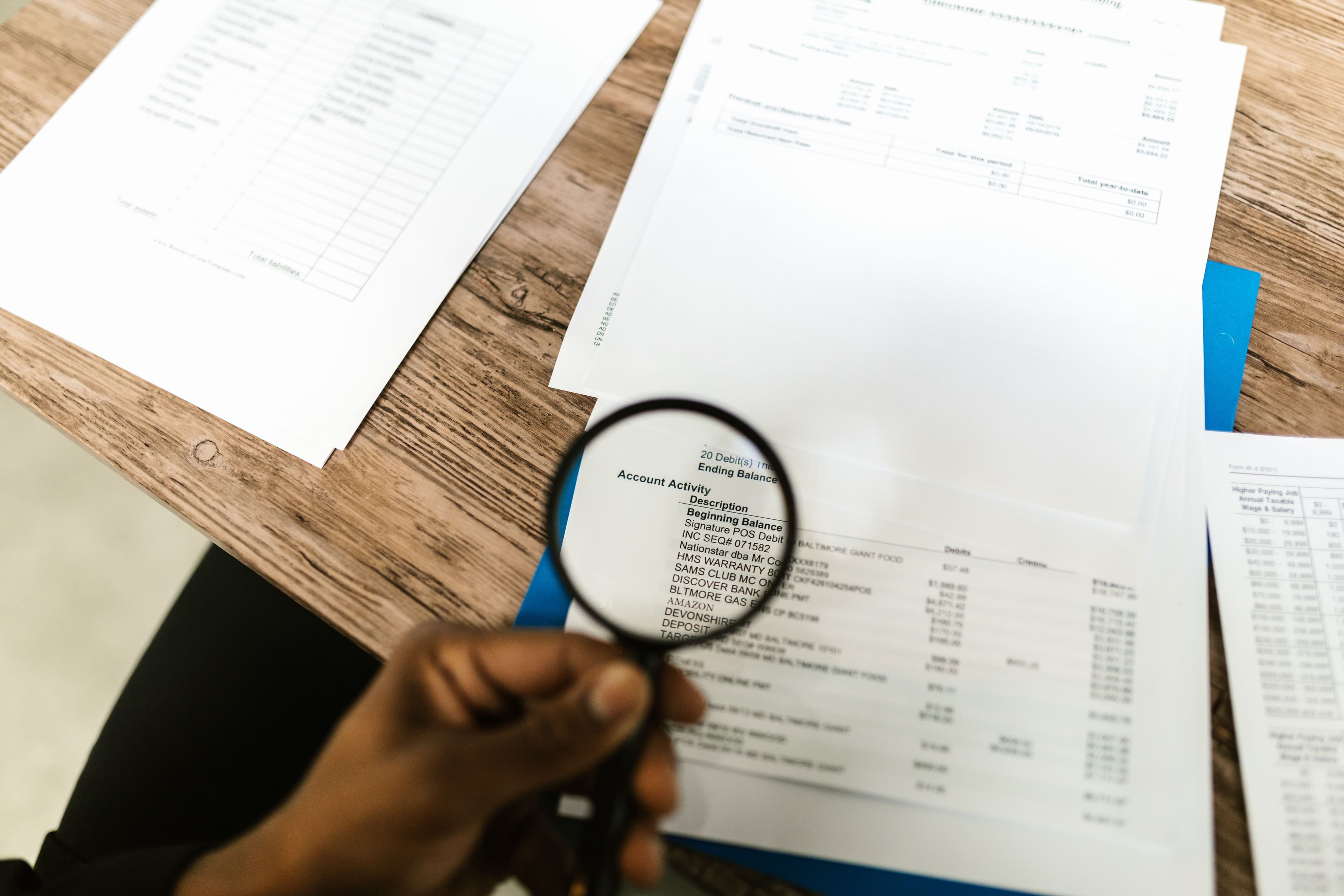
Read all three reports, not just one. Each bureau may get its information from different sources, so an error can show up on one report and not the others. Look for these mistakes, the kind that can become legal claims:
Accounts you never opened. A credit card, loan or collection you do not recognize can be a sign of identity theft. Our guide on identity theft on your credit report explains your right to have fraudulent accounts blocked.
A collection that is wrong. A debt that is not yours, the same debt listed twice by different collectors, or a balance that is higher than what you owe. See wrong collection on your credit report.
A paid or settled debt still showing a balance, or a closed account still marked as open and late.
Old negative items that should have dropped off. Most negative information cannot be reported after seven years (15 U.S.C. § 1681c).
Someone else's information in your file, such as a name, address or account belonging to a person with a similar name.
Hard inquiries you did not authorize. A company that pulls your credit without a legal reason may have broken the law. Read more on hard inquiries and when one is illegal.
How to dispute an error
Dispute with each bureau that shows the error. Explain in writing what is wrong and why, and include copies (never originals) of anything that proves it. Mail with tracking gives you the clearest record of what you sent and when. However you send it, keep a copy of exactly what you sent.
Dispute with the company that reported it. The lender or collector that supplied the information has its own duty to investigate once it is notified of a dispute through a bureau (15 U.S.C. § 1681s-2(b)).
Watch the clock. A bureau generally has 30 days to reinvestigate your dispute, and up to 45 days in some cases, such as when you send more information during the investigation or dispute an item after getting your free annual report. It must also pass your dispute to the company that reported the item (15 U.S.C. §§ 1681i and 1681j).
Keep everything. Save your letters, the bureau's responses, and any denial letters from lenders. If the error is not fixed, this paper trail is the evidence.
When the bureau will not fix it: your rights under the FCRA
A bureau that receives your dispute is required to do a reasonable reinvestigation, not just rubber-stamp what the creditor says. When a bureau fails to follow the law, or a furnisher fails to investigate after a bureau passes your dispute along, and an error stays on your report, the FCRA lets you sue. A furnisher's duty that you can enforce in court starts when your dispute reaches it through a credit bureau, which is why disputing with the bureaus matters.
Willful violations: actual damages, or statutory damages of 100 to 1,000 dollars, plus possible punitive damages, court costs and reasonable attorney's fees (15 U.S.C. § 1681n).
Negligent violations: actual damages, court costs and reasonable attorney's fees (15 U.S.C. § 1681o).
Actual damages can include a loan you were denied, a higher interest rate you were charged, and the stress and time the error cost you. If you win, the law also makes the company that broke it pay your reasonable attorney's fees. There are deadlines, though: an FCRA claim generally must be filed within two years of discovering the violation, and no more than five years after it happened (15 U.S.C. § 1681p).
For a closer look at when a dispute is not enough, see credit report errors and the FCRA.
Found an error on your report? Florida consumers can get a free case review
Getting your free report is the easy part. If it shows accounts that are not yours, debts reported wrong, or an error the bureaus refused to correct after you disputed it, Consumer Law Florida handles FCRA credit reporting cases for consumers across Florida. Tell us what happened through a free case review, and we will tell you whether the law is on your side.
Frequently Asked Questions

Free Consultation
Were your rights violated?
Free Consultation
Were your rights violated?
We fight for consumers — no upfront cost, no fee unless we win. (561) 264-7211
Consumer Law Florida · Licensed Florida attorneys · Serving clients statewide by phone & video