Practical guides on FCRA, FDCPA, and TCPA rights under Florida consumer protection law.
29 articles
Most people try to fix credit report errors themselves — and most of the time, the dispute process fails them. The Fair Credit Reporting Act gives Florida consumers the right to take legal action when bureaus and furnishers refuse to correct inaccurate information. Here is how that works, who qualifies, and what an FCRA attorney actually does.
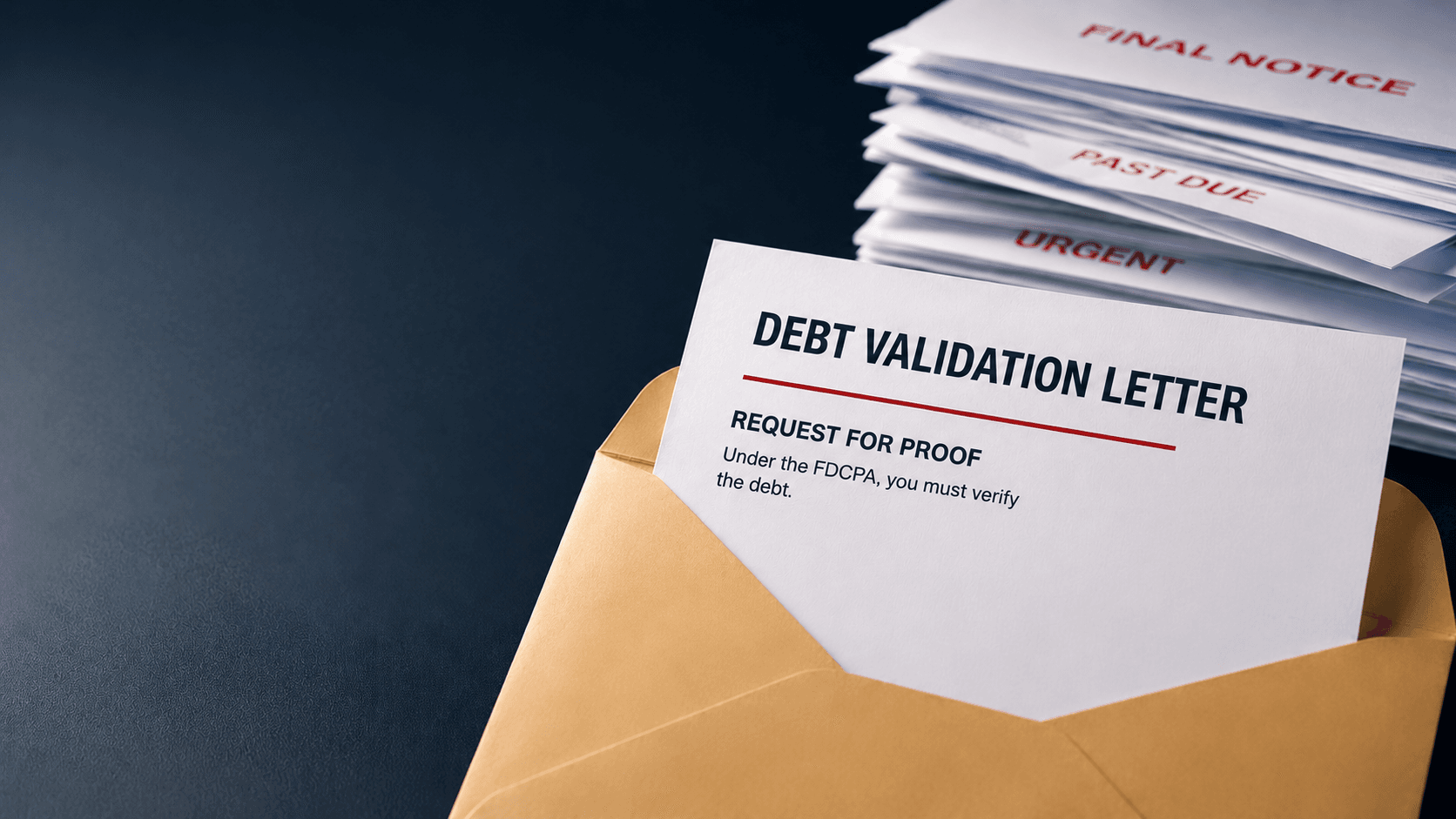
A debt validation letter forces collectors to prove you owe a debt before they can continue collection. Learn what it is, how to write one, what happens next, and get a free template you can send today under FDCPA protection.
Are debt collectors breaking the law? This complete FDCPA violations list covers harassment, threats, false statements, unfair practices, and illegal contact methods. Learn what counts as a violation and how to sue for up to $1,000 per call.
Getting illegal robocalls? You can sue under the TCPA for $500 to $1,500 per call. Learn what counts as a robocall violation, how to document calls, and how to take legal action in Florida—even if you don't have a lawyer.
Debt collectors who harass you are violating federal law. Learn what counts as harassment under the FDCPA, the 777 rule that limits collection calls, what proof collectors must provide, and how to sue for up to $1,000 plus damages in Florida.
Many consumers don't realize their rights have been violated. Get a free review — no fee unless we win.